

¡El Tour
Circuits à vélo à petit budget au Mexique
www.BikeMexico.com
Les archives complètes · 2000–2020
The Other Yucatan 2001-02 (preliminary)
Saison 2001–2002 · tous les circuits de cette saison-là
Les documents préservés sur cette page — descriptions d'itinéraires, programmes jour par jour, légendes de photos, dépêches et avis de cyclistes — sont reproduits tels qu'ils ont été rédigés à l'origine : en anglais.
Annoncé comme un circuit [préliminaire], avec un Forfait des guides à moitié prix de CA$200 — une première reconnaissance des recoins les plus tranquilles de la péninsule, plusieurs coûts restant marqués TBD (à déterminer).
Note d’archive : Retrouvé sur eltour.itgo.com, le domaine d'origine de la compagnie avant bikemexico.com. Distance et difficulté étaient encore indiquées 'to be determined' (à déterminer) - l'itinéraire était tout neuf cette saison-là - et la base de données clients n'enregistre aucun participant pour cette édition préliminaire. La page des circuits 2001 l'annonçait comme 'preliminary killer difficulty tour' (circuit préliminaire de difficulté killer) à CA$700 - en février 2002, le prix avait été porté à CA$1040, aligné sur Yucatan's Beaches & Ruins.
| Dates: | Wed Jan 30, 2002 to Wed Feb 13, 2002 (2 weeks) |
| Temps forts: | Real Mexican-Yucatecan culture. Small towns, fishing villages, quiet roads, beaches, carnaval, ruins. Mérida big town Mexican architecture, art, food. |
| Via: | Mérida to Mérida. |
| Prix: | CA$700 (le coût terrestre total approximatif publié cette année-là) |
Le parcours
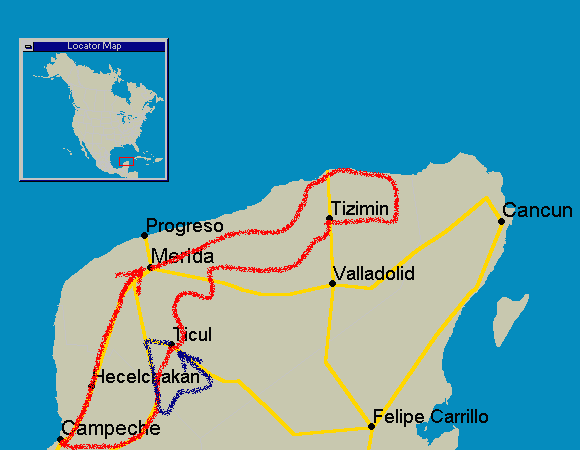
La route, le climat, le pays & les gens
The Road
The Yucatan's roads are considered the finest in Mexico. They are generally in excellent condition with even, paved surfaces. Some stretches of our route also include a paved shoulder. In most places, traffic is light to non-existent. Depending on the time of day, traffic can become busy, around Mérida. However, drivers are generally respectful of cyclists and will give you as much room as possible. The route meanders along flat terrain through jungle, swamp, salt marshes and long stretches along the Gulf�s windswept seashore. The road will take you through kempt villages and along deserted beaches. Along the route you will observe a stunning variety of aquatic birds and butterflies and enjoy memorable meals.
The Weather
The Yucatan's best weather is during our winter months. From November till March the temperature hovers in the mid to high 20's with sunny clear skies. Humidity levels can be high inland but a warm steady breeze and the occasional but rare tropical rainstorm will keep you feeling refreshed.
The Land
The Yucatan peninsula at the southeastern tip of Mexico is comprised of three states, Campeche, Yucatan, and Quintana Roo. The peninsula is a flat, massive carbonate - limestone shelf, formed by prehistoric high sea levels. Too porous to support a river system, fresh water accumulates underground forming an extensive subterranean river network. Where the erosive process has broken through the earth's surface, cenotes (se-no-tes; limestone sinkholes or pools) have formed. Erosion has also formed numerous caves, some of them enormous and accessible to tourists. The peninsula's landscape is covered by thorn forest in the north and rain jungle in the south. The scent of jungle flowers fills the air and exotic birds fly through the bush. As a result of the peninsula's isolation and lack of development, birds and animals are thriving. The "land of the turkey and deer" is home to exotic creatures such as peccaries, tapirs, manatees, iguanas, crocodiles, armadillos, snakes, and jaguars. The northern Gulf Coast�s huge wetlands contain a stunning variety of aquatic birds. This area is the winter home to many migrating birds and butterflies from the frozen north.
The People
The Yucatan is home to some of the friendliest people on earth. A large percentage of the population is Maya. They are small in stature with facial features that resemble the North American Indians. They speak their own native tongue as well as Spanish. The largest proportion of the peninsula's inhabitants is mestizo; descendents of both Spanish and Indigenous blood-lines.
Itinéraire
Cliquez sur n’importe quel jour pour la description complète. Les itinéraires ont toujours été sujets à de légères modifications.
QuandOùDistanceTemps forts
Day 0Meet in Mérida-
Yucatan cuisine, Colonial Architecture, Carnaval [more]
Mérida, the White City, was founded in 1542. Its architecture still shows an exquisite union of pre-Hispanic and European elements. During its Colonial era, this state capital was the most important city in the region, leaving such living monuments as the House of Montejo, Government Palace, and the main building of the University of Yucatan. Museums, theatres, handcrafts, nightclubs and beautiful parks have created a beautiful and vibrant city. Once settled into our hotel room, we will experience Méridas delicious culinary tradition at one of Mérida's numerous restaurants.Day 1Mérida to Santa Clara (via Conkal, Baca, Dzemul, Telchac, and Dzindzantum)~75 km
Picturesque Colonial Towns, Henequen Plantations [more]
After leaving the city limits, a narrow paved road heading in a northeastern direction will meander through picturesque towns and huge henequen plantations. Once we reach the Gulf Coast the sleepy white-washed fishing village of Santa Clara will welcome us. We'll spend the remainder of the day at the beach in front of our hotel and the evening at a local restaurant enjoying a delicious seafood meal.Day 2Santa Clara to Progreso~60 km, flat
Gulf Coast Road, Long Pier, Market, Beach, Sea Food [more]
As you head west towards Progreso, the beautiful scenery will enchant you. The Gulf Coast Road meanders through expanses of salt marshes and coconut groves with the sea constantly in view to your right. You will observe and hear a wide variety of beautiful birds and roll through small, sleepy, whitewashed fishing villages where you can stop for drinks and snacks. Progreso, a small, fishing village at the end of the road, makes its fortune hauling in shrimp, red snapper, octopus, and tuna and exporting henequen. Progreso remains a tranquil and tourist free town. The long limestone shelf under its harbour and the resulting shallow waters has kept large cruise ships and tourists away. To increase Progreso's role as a shipping port and to attract cruise ships its 2km long pier (muelle) was recently extended to 7 km into the Gulf waters using a small island. The Gulf Coast's most popular beach requires you to walk out a great distance to reach shoulder deep water. Progreso is also located in the Chicxulub Crater. Many scientists believe that the meteor that struck the earth to form this huge (180 km in diameter and 1100 m in depth) crater led to the extinction of the dinosaurs.Day 3ProgresoOptional extra kms
Long Pier, Market, Beach, Sea Food. An optional side trip to visit small nearby villages. [more]
Progreso, a small, fishing village at the end of the road, makes its fortune hauling in shrimp, red snapper, octopus, and tuna and exporting henequen. Progreso remains a tranquil and tourist free town. The long limestone shelf under its harbour and the resulting shallow waters has kept large cruise ships and tourists away. To increase Progreso's role as a shipping port and to attract cruise ships its 2km long pier (muelle) was recently extended to 7 km into the Gulf waters using a small island. The Gulf Coast's most popular beach requires you to walk out a great distance to reach shoulder deep water. Progreso is also located in the Chicxulub Crater. Many scientists believe that the meteor that struck the earth to form this huge (180 km in diameter and 1100 m in depth) crater led to the extinction of the dinosaurs.Day 4Progreso to Sisal55 km
Gulf Coast Road, Flora and Fauna, Beach [more]
A lonely, semi-deserted fishing village, Sisal was in the 19th century Mérida's main port of entry and exit to the rest of the world. Through here passed a variety of products, including the famous Yucatecan henequen. The remains of its formidable city walls built by the early settlers as protection against the pirates are worth a visit. But the beaches, the quiet sea and the beautiful scenery are Sisal's most enchanting attractions.Day 5Sisal to Mérida (via Samahil, Kinchil, Uman)53 km
Colonial Center, Zocalo, Market [more]
Mérida, is a state capital and commercial center. It is also the cultural focal point of the entire peninsula. Tourists are attracted to the history and beauty of this vibrant city. Its colonial center, Centro Colonial, is busy with Maya men and women in traditional dress. College students lounging at nearby cafes and businessmen and women rushing to their offices. Meridians enjoy long, leisurely promenades in the zocalo. The zocalo's clock tower chimes 4 times an hour and dawn and dusk are greeted by a flag ceremony, accompanied by the music of a military band. Nearby you will be able to visit venerable old churches like the yellow cathedral with its twin towers containing what is claimed to be the second largest crucifix in the world. There is also the Palacio de Gobierno with its stairway painting depicting the Maya belief that humanity comes from maize. Under the balcony of the Palacio Municipal concerts and classes in jarana, a Yucatan colonial dance, take place. The nearby market or Mercado is huge, noisy, colourful and crowded. Anything you might want to buy can be found there or even made for you while you wait. Of special interest are the famous Yucatan hammocks. There are numerous museums and parks to visit as well as a never-ending series of free music and dance events to attend each day of the week.Day 6Mérida-
Colonial Center, Zocalo, Market [more]
Mérida, is a state capital and commercial center. It's also the cultural focal point of the entire peninsula. Tourists are attracted to the history and beauty of this vibrant city. Its colonial center, Centro Colonial, is busy with Maya men and women in traditional dress. College students lounging at nearby cafes and businessmen and women rushing to their offices. Meridians enjoy long, leisurely promenades in the zocalo. The zocalo's clock tower chimes 4 times an hour and dawn and dusk are greeted by a flag ceremony, accompanied by the music of a military band. Nearby you will be able to visit venerable old churches like the yellow cathedral with its twin towers containing what is claimed to be the second largest crucifix in the world. There is also the Palacio de Gobierno with its stairway painting depicting the Maya belief that humanity comes from maize. Under the balcony of the Palacio Municipal concerts and classes in jarana, a Yucatan colonial dance, take place. The nearby market or Mercado is huge, noisy, colourful and crowded. Anything you might want to buy can be found there or even made for you while you wait. Of special interest are the famous Yucatan hammocks. There are numerous museums and parks to visit as well as a never-ending series of free music and dance events to attend each day of the week.Album photo
Ce circuit lors d’autres saisons : 2002–2003